The Industrial Look You Want, Without the Shipping Container Headaches
Every week, homeowners across Ontario search for shipping container sheds. The appeal makes perfect sense: that clean, bold, industrial aesthetic is genuinely striking. A steel structure with hard lines and a modern profile looks incredible in the right backyard.
The problem? Actual shipping containers (sea cans, ISO containers, whatever you call them) are built to haul freight across oceans. Not to sit in your backyard as a comfortable, practical storage shed or studio space.
At Backyard Escape Studios, we've spoken with hundreds of customers who tried the sea can route first. They hit the same wall every time. So we built something better: our Cube shed. Same industrial look. Canadian-made steel. Real insulation. No crane, no chemical concerns, and a one-day install that won't tear up your lawn.
Here's the full picture, so you can decide for yourself.
The Real Problems With Shipping Container Sheds or Studios
1. Condensation and Rust: The Biggest Problem Nobody Talks About
Steel conducts temperature almost instantly. When warm air inside a shipping container hits cold steel walls, moisture forms. It forms constantly. That moisture becomes rust. That rust becomes structural damage.
This isn't a rare edge case. It's the single most common complaint from people who've tried shipping container sheds. The container sweats. Your stored items get damp. Tools rust. Woodwarps. Over time, the container itself corrodes from the inside out.
Fixing it properly requires spray foam insulation across every interior surface, an expensive retrofit that still leaves you working around the container's fixed dimensions and corrugated walls.
2. Chemical Exposure: Used Containers Have a History
Shipping containers are treated to survive ocean crossings. That means the floor is typically saturated with chemical pesticides (some containing arsenic and chromium) to meet international import regulations. The exterior paint often contains chromate, phosphorous, and in older containers, lead-based compounds.
That's fine when the container is crossing the Pacific. It's a different conversation when your kids are using the space as a backyard studio or you're working in there daily.
Mitigating these risks requires stripping floors, sealing all surfaces, and knowing the container's full history. That history is rarely available for a used container.
3. Delivery Is a Serious Logistical Problem
A standard 20-foot shipping container weighs close to 5,000 pounds. Getting it into your backyard means a flatbed truck and typically a crane or specialized equipment. That equipment has to reach your property, which means wide access, potentially torn-up landscaping, and significant coordination costs on top of the container price itself.
In dense neighbourhoods, which covers most of Ontario, this is either impossible or deeply impractical.
4. Permits in Ontario Are Not Optional
In Ontario, any structure over 10 square metres (108 square feet) requires a building permit. A standard 20-foot shipping container is 160 square feet, well over that threshold. The Ontario Building Code classifies containers placed on land as structures, subject to the same rules as permanent buildings, including setback requirements and foundation standards.
The City of Hamilton made this explicit in a public notice: containers must comply with zoning by-laws and property line setbacks, just like any other building. Non-compliance can result in orders to remove the structure and potential fines.
5. Customization Is Expensive and Awkward
Want a window in a specific spot? Doors in a non-standard location? Any modification to a shipping container requires cutting through thick corrugated steel and reinforcing the opening. That work requires specialized equipment, welding skill, and adds significant cost.
The result is often a compromise. You get something close to what you wanted, but not quite.
6. The 'Green' Argument Doesn't Hold Up
Upcycling a shipping container sounds environmentally responsible. In practice, shipping containers are made of highly recyclable Corten steel. They are already well-suited for recycling. Pulling one out of the recycling stream to use as a backyard shed isn't necessarily more sustainable than building a new, purpose-designed structure.
A Backyard Escape Studios Cube uses less than 10% of the steel weight of a standard 20-foot container. The materials impact is dramatically lower from the start.
The Better Solution: The BES Cube Shed or Studio
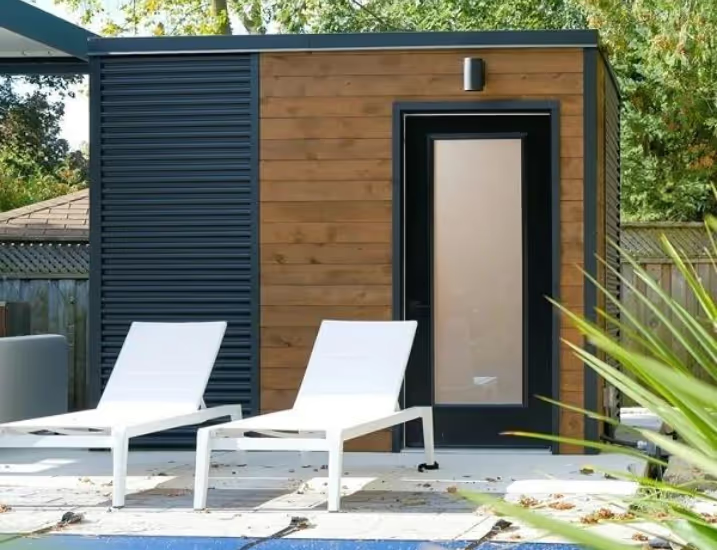
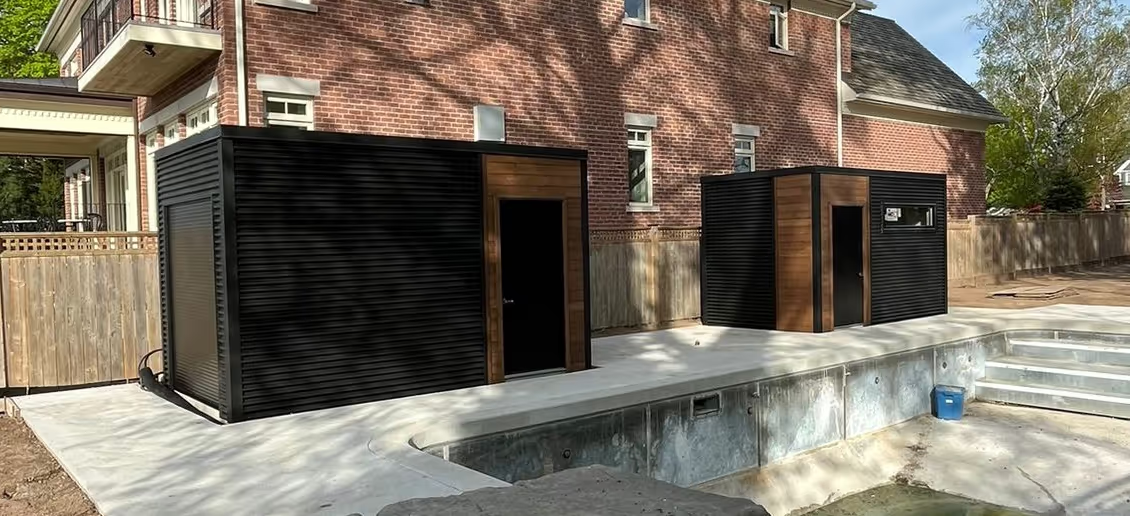
The Cube shed from Backyard Escape Studios was designed specifically for homeowners who want the container look without every problem that comes with an actual container. It starts with the same clean, squared-off profile and industrial aesthetic, then improves on every single practical drawback.
Built Right From the Start
The Cube is a real wood-framed structure clad in premium Canadian steel. That means a proper framed wall system with genuine backing, not a retrofitted metal box. It's built to Ontario Building Code standards for backyard use, and it handles Ontario snow loads,including heavier snowfall in cities like Ottawa, without any structural concern.
Insulation-Ready by Design
Unlike a bare sea can, the Cube is designed to accept insulation properly. There is no fighting corrugated walls or spray-foaming over chemical surfaces. The wall system is built to accommodate insulation, making year-round use as a home office, gym, studio, or workshop genuinely practical.
One-Day Install, No Crane Required
The Cube is pre-fabricated in panels at the Backyard Escape Studios shop in Port Stanley and London, Ontario, then installed by a professional crew in a single day. No flatbed truck blocking your street. No crane. No torn-up lawn. The crew arrives, installs, does a full walkthrough, and you're done.
Fully Customizable
Size, steel colour, door style, window placement, siding material: everything is configurable. The Cube starts as a framework and becomes exactly what your backyard needs. French double doors for wide access, a roll-up door for tool storage, frosted glass for a studio feel.
Clean Canadian Materials
No unknown chemical history. No treated foreign floors. No marine coatings. Every Backyard Escape Studios build uses premium, purpose-selected materials manufactured for residential use in Canada.
Shipping Container vs. BES Cube: Side by Side
| Feature |
Shipping container |
BES Cube shed |
| Insulation |
None (bare steel) |
Fully insulation-ready |
| Condensation & rust risk |
High: steel sweats and corrodes from inside |
Minimal: wood-framed, properly sealed |
| Delivery |
Flatbed truck and crane required |
Installed in one day, no crane |
| Customization |
Limited (cut-and-weld modifications) |
Size, siding, doors, windows: all configurable |
| Lawn & yard damage |
Heavy equipment tears up yard |
Light install, no heavy machinery |
| Chemical exposure |
Treated floors, lead-based paint possible |
Clean Canadian materials throughout |
| Weight |
~5,000 lbs (20 ft container) |
Under 10% of that in steel |
| Permit (Ontario) |
Required: classified as a permanent structure |
Same rules, easier to size under threshold |
| Aesthetic |
Industrial eyesore without major renovation |
Modern, architectural, customizable |
| HOA & neighbourhood |
Often restricted or banned outright |
Looks like a quality backyard structure |
| Environmental impact |
Pulls recyclable steel from the recycling stream |
Uses less than 10% of the steel, lower waste overall |
Who the Cube Is Right For
The Cube works particularly wellfor homeowners who:
- Want a modern,architectural look that complements a newer home or landscaped backyard
- Are planning a pool shed and need something that looks intentional, not incidental
- Want to use the space year-round as a home office, gym, workshop, or studio, and need insulation from day one
- Live in a neighbourhood where an actual shipping container would be restricted by HOA rules or municipal by-laws
- Don't want the logistical complexity of crane delivery and heavy equipment access
- Want a structure that looks like it belongs on the property, not a freight yard
Why Homeowners Across Ontario Choose Backyard Escape Studios
Backyard Escape Studios is based in Port Stanley, Ontario. Every shed and studio is pre-fabricated in the shop and installed by a professional crew, typically in a single day. The process is structured and straight forward: a detailed quote, a personal 3D sketch so you can visualize the finished structure.
The Cube is one model in a broader lineup that includes the Essential and the Advanced, all built to the same structural standard. Every build starts with your actual backyard: the dimensions, the access, the aesthetic, and the finished look you are after.
Ready to Get Started?
If you have been researching shipping container sheds and want something that delivers the same look with none of the headaches, the Cube is worth a closer look. Reach out to start a conversation. Sizing, pricing, and design are all covered in an initial quote with no obligation.
Contact UsFrequently Asked Questions
Is a shipping container shed a good idea for a backyard in Ontario?
For most Ontario homeowners, no. Not without significant retrofitting. Bare shipping containers have no insulation, suffer from severe condensation in Ontario's climate, require permits like any other structure, and need crane delivery. A purpose-built shed with a similar industrial aesthetic, like the BES Cube, solves all of these problems.
Do I need a permit for a shipping container shed in Ontario?
Yes. In Ontario, any structure over 10 square metres requires a building permit. A standard 20-foot shipping container at 160 square feet exceeds this threshold. Shipping containers are classified as structures under the Ontario Building Code and are subject to zoning setback requirements. Placing one without a permit can result in removal orders and fines.
What is a cube shed?
A cube shed is a storage shed designed with a squared-off, architectural front profile. It shares a similar aesthetic with a shipping container but is built as a proper wood-framed structure clad in steel siding. The Backyard Escape Studios Cube is the company's design-forward storage shed model, built to Ontario Building Code standards and fully customizable in size, colour, and door and window configuration.
Are shipping container sheds insulated?
Not by default. Bare shipping containers are raw steel with no insulation, and they conduct temperature almost immediately. This causes severe condensation, especially in Ontario winters and hot summers. Retrofitting insulation is possible but expensive and complicated. The BES Cube is designed to accept insulation properly from the start.
How much does a shipping container shed cost compared to a custom shed?
A used 20-foot shipping container in Ontario typically starts around $3,000 to $5,000, but delivery, crane rental, modifications (windows, doors, insulation), and permit costs add significantly to that number. The BES Cube includes professional installation and avoids all of those retrofit costs. For a comparable finished result, the pricing is competitive and the Cube delivers a better overall outcome.
What is the best alternative to a shipping container shed?
For homeowners who want the modern industrial look of a container shed without the practical drawbacks, the BES Cube is designed specifically for that use case. It uses premium Canadian steel cladding over a wood-framed structure, installs in a single day, and is fully customizable.
See our Gallery