
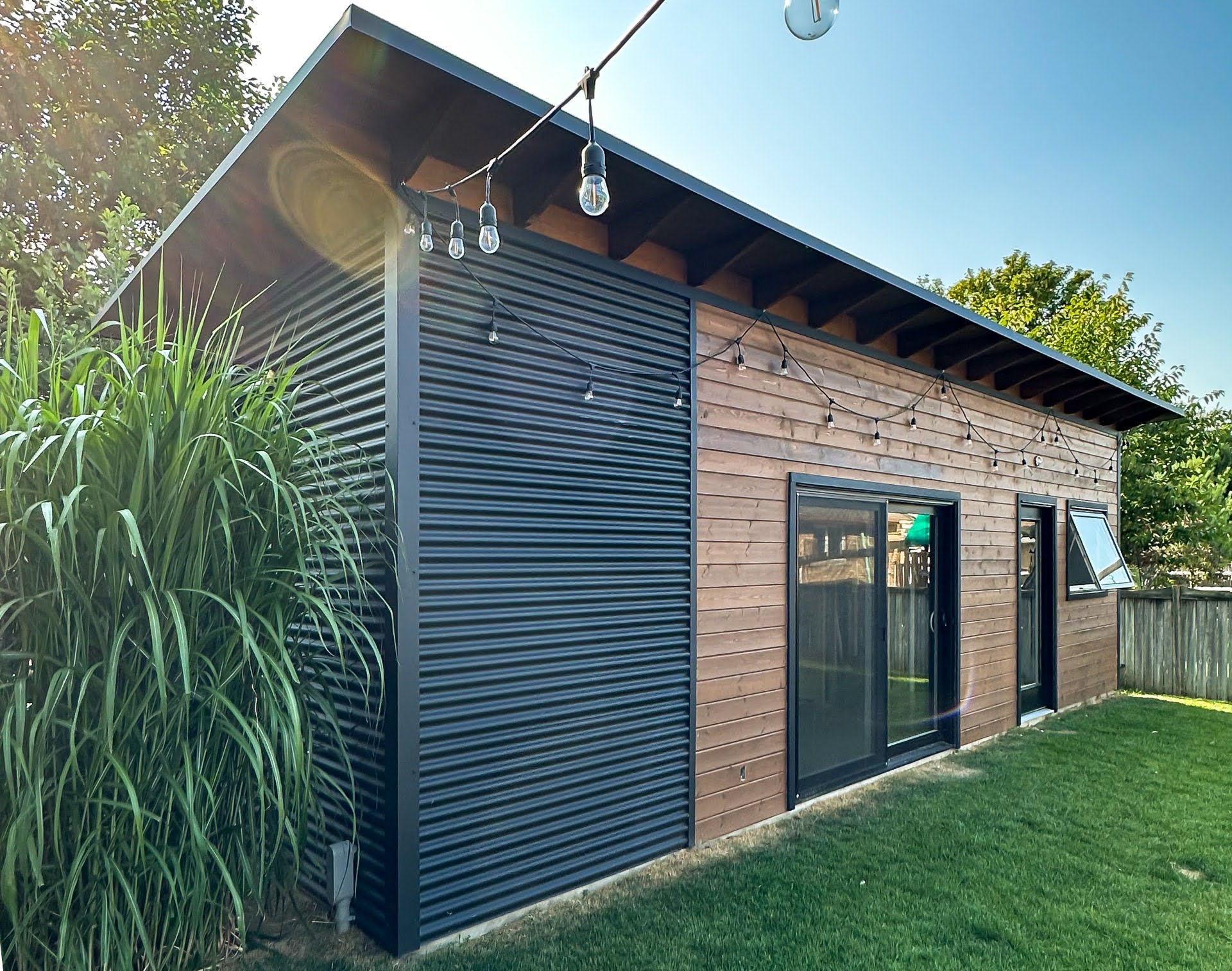
A good garden shed studio is more than four walls and a place to park random stuff. It is a small, hard‑working building that supports real work, real hobbies, and real storage without feeling cramped or messy. When the layout is planned properly, it can feel calm and organised even on your busiest days.
In a compact space like this, details matter. Where the built‑ins go, how you run power and hide cables, and how you plan your workflow all affect comfort, safety, and how long the structure truly serves your home. When these choices are made at the design stage, you lower long‑term risk: less clutter, fewer cord trip hazards, better comfort in every season, and no need to tear things apart later to fix problems.
At Backyard Escape Studios, we design and build garden shed studios in Ontario that are code‑built, insulated, and tailored to each property. Our focus is clean modern aesthetics outside and clear organisation inside, with a process that keeps things straightforward for homeowners from first sketch to final installation.
Before thinking about shelves or tool walls, decide what your garden shed studio needs to be first and what it needs to be second. Common primary uses include:
Secondary uses often include storage for gardening gear, sports equipment, or seasonal decor. This mix shapes where we place built‑ins, windows, doors, and power. For example, a desk-based office may need more wall space free for screens and shelving, while a workshop benefits from long bench runs and open wall area for tools.
It helps to list what you expect to do:
This lets us create clear zones: a quiet work zone around the desk, a more active bench or work zone, and a seasonal storage zone that does not interrupt either one. Because our structures are code‑built and insulated for Ontario weather, you can plan for year‑round use without worrying that your layout only works in summer.
You do not need all the answers before you start. We guide homeowners through simple use‑case questions so the final layout suits real life, not a generic plan.
Integrated storage is usually the best choice in a garden shed studio. Compared with random freestanding units, built‑ins are stronger, safer, and use every bit of space more efficiently. They also keep the interior feeling like a finished room rather than a utility shed.
We often design storage in a few clear zones:
Think drawers for small tools or office supplies, shallow shelves for notebooks or paints, and a small cabinet for tech gear or hand tools. Everything you touch every day should live here, within easy reach and not stacked on the work surface.
Tool boards, rail systems, magnetic strips, and clear bins keep items visible and off the floor. This might be your main tool wall in a workshop or a tidy supply wall in an art studio.
Overhead cabinets, tall closets, and deep shelves near the rear of the studio are perfect for patio cushions, camping gear, winter sports items, or gardening tools you only use part of the year.
Bench seating with lift‑up lids, slim vertical cabinets that line up with wall panelling, or low built‑ins under windows add storage without visual clutter.
When we design these zones, we plan for weight and safety. That means fastening into studs, using proper load ratings, and leaving ventilation where you might store finishes or garden products. Clean, modern built‑ins can echo the lines of the exterior and the window layout, so the whole studio feels like a cohesive space, not an afterthought.
Power planning can make or break a garden shed studio, especially in a small wood structure that may hold computers, power tools, and heating or cooling equipment. A code‑built wiring plan is about safety, but it also makes daily life much easier.
We like to think in power zones:
From there, we add cable management details so the space stays visually calm: grommets in desks, recessed power strips, and conduit or raceways that line up with trim so they almost disappear. Routers, hubs, or backup drives can live in ventilated cabinets close to where you work, not across the room on a tangle of cords.
Ontario homeowners often need to plan for space heaters, mini‑split units, dehumidifiers, fans, or air purifiers. We allow for those loads, avoid relying on overloaded power bars, and leave room for future upgrades like more outdoor lighting. Professional installation and inspections keep your studio within code and help prevent frustrating limits once you move in.
Once zones and power are clear, we look at how you will move through the space. A few simple rules help a lot:
A tool‑wall strategy works for both offices and sheds. Near a bench, pegboard or rail systems can hold tools, craft supplies, or gardening gear. Group items by task, label bins and hooks clearly, and keep sharp or heavier pieces higher and properly secured.
Seasonal item rotation keeps a garden shed studio flexible:
Simple systems help this feel easy, not like a major project:
The structure itself does a lot of the heavy lifting. Tall ceilings make overhead storage practical, while well‑placed windows, doors, and clear wall space keep rotations smooth instead of cramped. When the garden shed studio is designed with this in mind, it feels settled and organized even as your storage needs shift.
A garden shed studio is part of your property, not a temporary fix. When you take time to define its purpose, plan built‑in storage zones, design safe, tidy cable management, and map a workflow layout that respects both work and storage, you end up with a space that still works five or ten years from now.
At Backyard Escape Studios, we focus on code‑built construction, clean modern design, and careful planning so your studio feels organised, safe, and comfortable through every Ontario season. Our structured process is designed to make choices about zoning, storage details, and wiring clear and manageable, so your new garden shed studio works as hard as you do and is ready to grow with you over time.
If you are ready to create a quiet, functional space at home, our team at Backyard Escape Studios can help you design a custom garden shed studio that fits your needs and your yard. We will guide you through layout, finishes, and installation so your new space feels comfortable year-round. Have questions about design, timelines, or pricing? Simply contact us and we will walk you through the next steps.
Today is the day to start building the structure of your dreams. Share your design ideas with us so we can get started on bringing your shed to life.
