
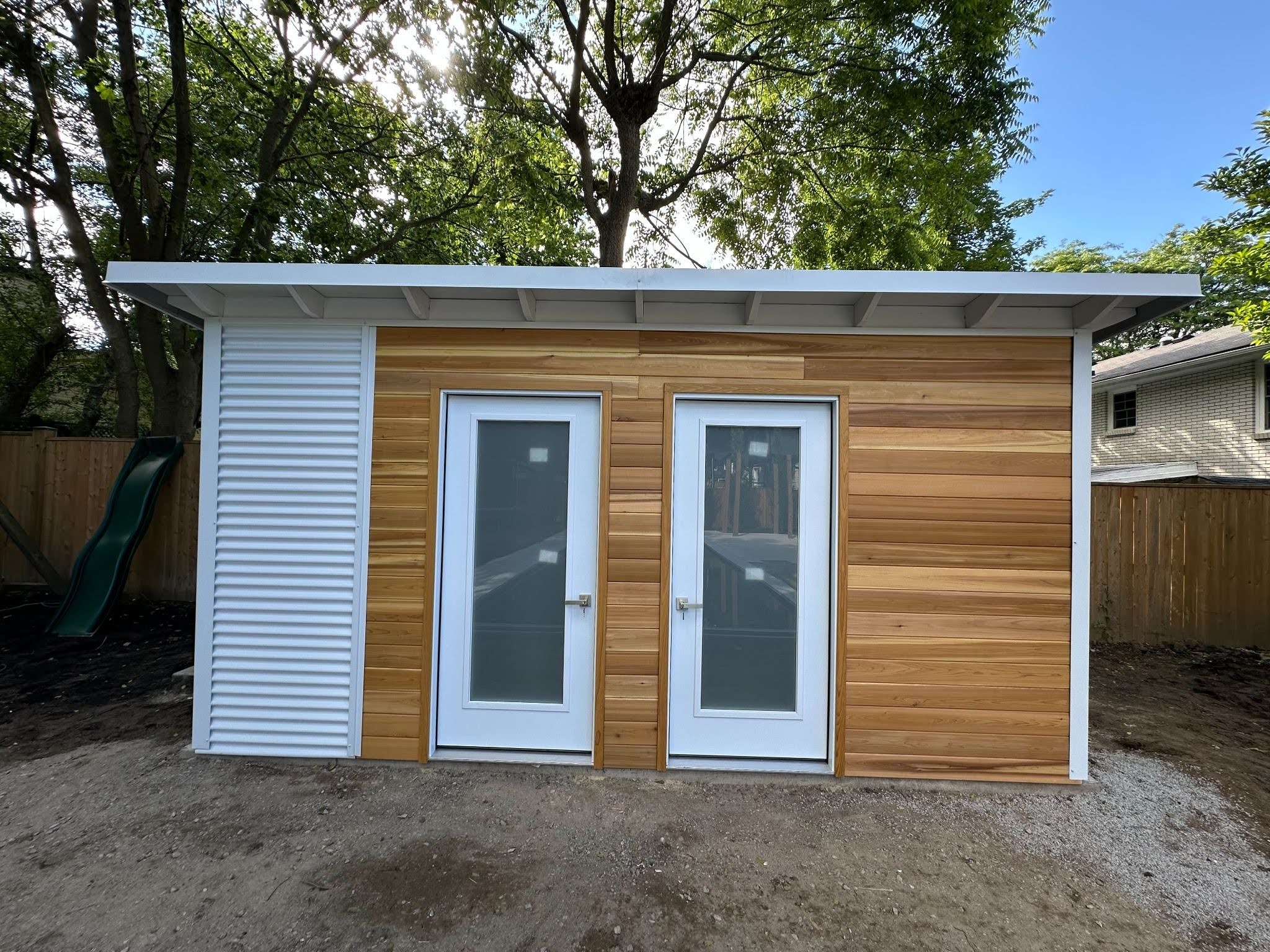
A shed in Ontario has to do more than hold a few boxes. It needs to stand up to heavy snow, wild temperature swings, wet springs, strong winds, and bright summer sun. Choosing between a plastic resin shed, a metal shed, or a wood garden shed in Ontario is really about deciding how long you want it to last and how you plan to use it.
In this article, we walk through how each material behaves in real Ontario weather, what kind of upkeep it needs, and how the total cost plays out over 5, 10 and 20 years. Our goal is to help you feel clear and calm about your choice, whether you need a simple storage shed or a modern backyard studio.
Ontario does not go easy on outdoor structures. Over time, UV rays, repeated freeze-and-thaw cycles, damp ground, and drifting snow all add up.
Here is how those forces affect each material:
Resin sheds often handle light use for a few years, but constant exposure to deep cold and summer heat can cause panels to warp or crack. When that happens, doors go out of alignment and small gaps invite water and pests.
Metal sheds might look tough at first, yet the temperature difference between cold steel and warm interior air often creates moisture on the inside of the panels. If that moisture has nowhere to escape, rust can start, especially around screw holes and seams.
Wood structures rely on proper design. When a wood shed is built to Ontario Building Code, with attention to drainage, air flow and structural loads, it can carry snow, resist wind and stay dry for many seasons. A strong foundation, correct anchoring and good grading around the shed are just as important as the material itself.
Resin sheds appeal to many homeowners because they are:
For simple, seasonal storage, such as a few garden tools or cushions, a resin shed can seem like an easy win. The trade off appears over time. In harsh winters, panels can flex under snow loads. Fading and surface chalking change the look. Once plastic parts crack, repair options are limited, and replacement is often the only path.
Metal sheds are often chosen because metal feels secure and long lasting. In practice, common issues in Ontario include:
Insulating a metal shed for year-round use is also tricky. Bridging, where cold passes through the metal framing, can make it hard to keep an office or hobby room comfortable. If the base is not perfectly flat and anchored, wind can loosen panels and shorten the structure’s life, turning what was meant as a long-term shed into a temporary solution.
A well-designed wood shed is more than a shell; it is a small building. When it is planned and built with Ontario’s snow and wind loads in mind, it behaves much more like a tiny house than a big box kit.
Key advantages of wood include:
This is what makes a wood garden shed in Ontario such a good choice for both storage and backyard studios. You can keep bikes, tools and seasonal decor dry and secure, and you can also carve out a bright work area, art space or home office with real comfort.
Many people worry about rot and pests in wood. Modern construction methods address this through:
When moisture is kept away from key structural parts and air can move through the space, wood performs very well long term.
Every shed needs some care, no matter what the label promises. The difference is what you actually have to do each year and how much control you have over repairs.
Typical maintenance looks like this:
A professionally built wood garden shed usually follows a predictable rhythm. Small, simple tasks done regularly help avoid big surprises. Finishes can be refreshed, trim can be replaced if needed, and almost every part of the structure is repairable.
When we talk about total cost of ownership, we look beyond the sticker on the box. Costs over 5, 10 and 20 years include:
Resin and light metal sheds often feel affordable at the start, but if they need to be replaced once or twice over the span of a wood shed’s life, the long-term picture shifts. A code-compliant wood structure that can adapt to new uses, like turning part of the space into an office, spreads its value over a much longer period.
A backyard building changes how your whole property feels. Material choice has a big impact on that.
Resin and metal sheds often look like add-ons. Their colour options are limited and they are hard to match to the style of your home. They do a basic job of hiding clutter, but they rarely add to curb appeal.
Modern wood studios and sheds can be designed to feel like a natural extension of the house. Thoughtful choices in siding, trim, window size and placement can:
Whether you call it a shed, studio, backyard office or even a redefined she shed, a well-designed wood building can carry many roles as your needs change.
This is where professional, code aware construction makes a big difference. Compared with a big box kit, a custom wood structure usually comes with:
For busy homeowners, not having to coordinate multiple trades or guess at local building rules removes a lot of stress. It also reduces the risk of problems like shifting, leaks or poor insulation showing up a few years down the road.
As seasons change in Ontario, it helps to think beyond the next winter or the next round of yard clutter. When you look at how you want to live and work in your space over the next decade or more, the choice of shed material becomes clearer. A well-planned wood garden shed in Ontario can move you past temporary fixes and into a backyard that works hard for you, all year, for many years.
Transform your yard into a functional, beautiful space with a custom-built wood garden shed in Ontario designed to suit your needs and property. At Backyard Escape Studios, we work with you to create a durable, attractive structure that adds lasting value. Share your ideas and budget and we will guide you through styles, finishes, and options that fit your space. If you are ready to start planning, contact us and we will be in touch shortly.
Today is the day to start building the structure of your dreams. Share your design ideas with us so we can get started on bringing your shed to life.
