
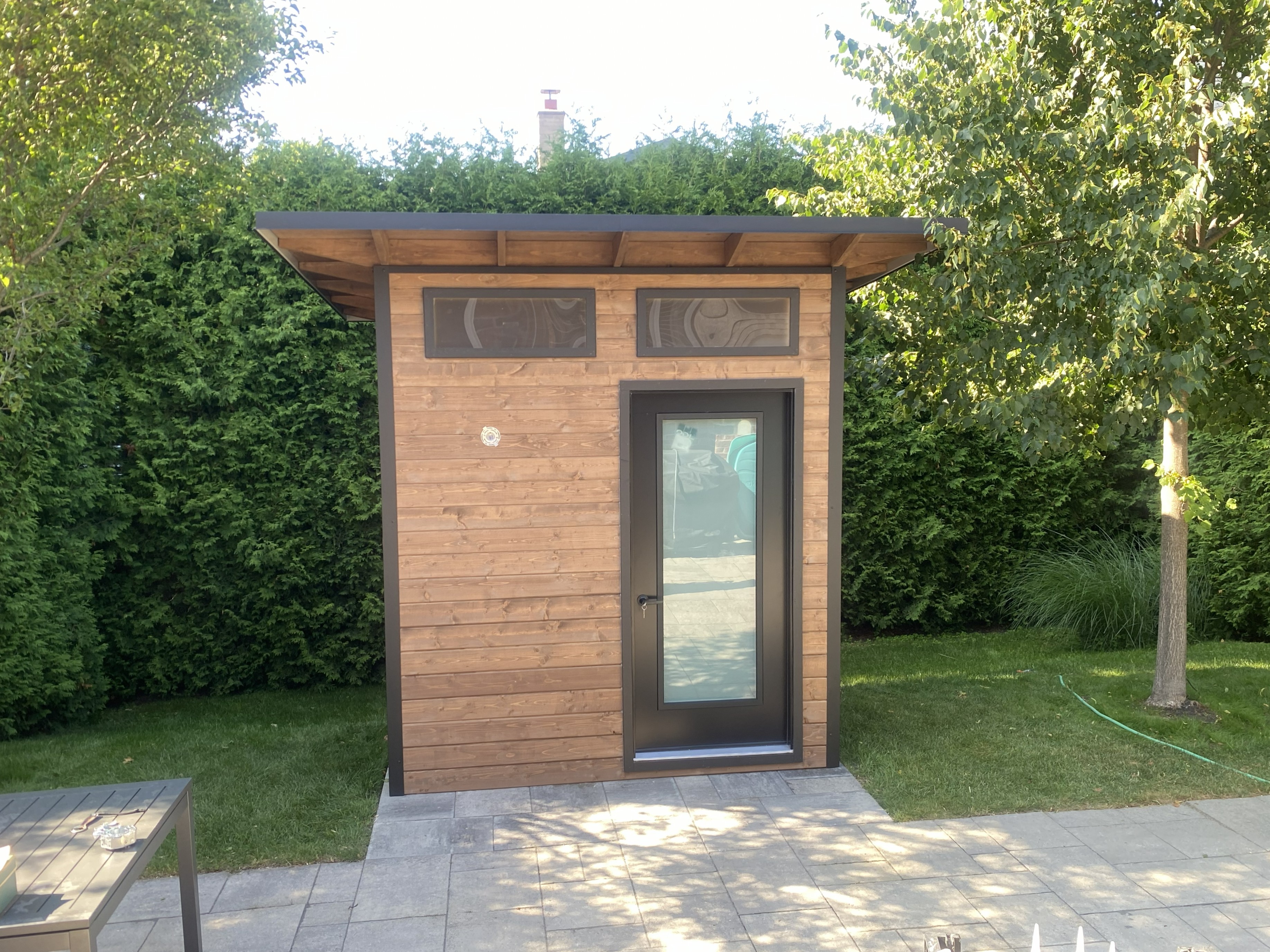
If you've searched "outdoor storage shed" recently, you've probably noticed the results are dominated by resin kits from Costco, metal sheds from Lowe's, and Amazon listings under $1,000. Those work for some buyers. For most Ontario homeowners, they don't last more than a few winters before the doors stop closing, the seams leak, or the roof sags under snow load.
This guide is for the second group. Homeowners in southwestern Ontario who want a shed that holds up to real weather, looks like part of the property instead of a plastic afterthought, and is still standing in fifteen years.
There are essentially three tiers in the Ontario shed market, and the differences matter more than most buyers realize before they buy.
Resin and plastic kits ($300 to $1,500). Brands like Keter, Suncast, and Rubbermaid. These are fine for a single use case. Storing a lawnmower, a few tools, maybe pool floats. They assemble in a weekend and won't rot. The trade-off is everything else. The walls flex in wind, the doors warp in summer heat, the floors aren't rated for heavy equipment, and the resin fades in direct sun within two or three seasons. In a southwestern Ontario climate, expect five to seven years before the shed looks tired enough to want replaced.
Metal kits ($600 to $2,500). Galvanized steel sheds from big-box stores. Better structural rigidity than resin, but the seams are where they fail. Condensation gets trapped inside, the floors aren't included, and the panels dent if anything falls against them. Snow load on the roof is a real concern. Most kit specs assume light residential snow, not Ontario winters off Lake Erie or Lake Huron.
Custom-built wood and steel sheds ($4,500 to $15,000+). Site-built or pre-built by a regional manufacturer. Real framing, real siding, real roofing. The same materials your house is built from. Twenty-plus year lifespan with basic maintenance. Costs more upfront but doesn't need replacing.
The question isn't which tier is "best." It's which tier matches what you're actually storing and how long you want the shed to last.
Whatever tier you're shopping in, these are the specs that determine whether a shed survives Ontario:
Snow load rating. Southwestern Ontario sees 200 to 300 cm of snow annually depending on lake-effect exposure. Roofs need to be rated for a minimum of 40 psf ground snow load. Most kit sheds aren't rated at all.
Foundation. A shed sitting directly on grass or pavers will rot, sink, or both. Look for sheds that come with, or are designed to sit on, a proper foundation. Pressure-treated skids, a gravel pad, or concrete piers. This is the single biggest predictor of how long any shed lasts.
Door height and width. If you're storing a riding mower, snowblower, or wheelbarrow, measure the equipment before you buy. Many kits have 5'4" door openings that won't clear standard yard equipment.
Ventilation. Closed sheds in humid Ontario summers grow mold on anything organic. Leather, cardboard, fabric, wood. Look for soffit vents, roof vents, or at minimum operable windows.
Door hardware. Roll-up aluminum doors handle snow drift better than swing doors, which jam against accumulated snow every winter.
A custom shed isn't always the right call. If you need somewhere to put a lawnmower and a snow shovel, a $600 Rubbermaid is rational.
A custom build makes sense when one or more of the following is true:
For Backyard Escape Studios builds in southwestern Ontario, a custom outdoor storage shed includes 2x4 framed walls with OSB sheathing, corrugated steel siding, pine front wall, aluminum roll-up door, and a TPO roof. The same envelope we build our studios with, sized for storage rather than occupancy.
Most Ontario municipalities allow storage sheds under 15 square metres (about 161 sq ft) without a building permit, but the rules vary by city. London, Kitchener, Waterloo, Cambridge, Guelph, and Stratford each have their own setback requirements from property lines and existing structures. A shed under the permit threshold still has to meet zoning bylaws, meaning even a Costco kit can technically be in violation if it's too close to the fence.
If you're buying a custom-built shed, the builder should be able to provide construction details that satisfy any permit or bylaw inquiry. Kit sheds rarely come with documentation that meets municipal requirements.
Three questions to answer before you buy anything:
If you're in southwestern Ontario and a custom-built outdoor storage shed is on the table, browse the Bike shed sizes, Essential Shed Sizes or request a quote with your property details.
Today is the day to start building the structure of your dreams. Share your design ideas with us so we can get started on bringing your shed to life.
