
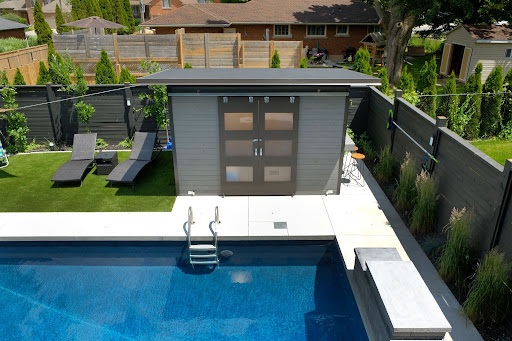
A pool equipment shed does a lot more than hide pumps, filters, heaters, and buckets of chlorine. It plays a key role in safety, comfort, and how well your pool system runs over time. When everything is crowded into a corner of the yard or placed in a thin prefabricated box, the risks add up quickly.
In Ontario, as pool owners start up systems for the season, many make do with whatever storage is on hand. That might work for a few weeks, but long-term it can mean electrical shock hazards, trapped chemical fumes, water damage, and easy access for curious children. This clear checklist can help you plan or assess a pool equipment shed with confidence, instead of guessing. At Backyard Escape Studios, we design and build purpose-built, code-aware backyard structures across Ontario, and we see how thoughtful planning can remove a lot of stress.
This checklist focuses on five main areas: ventilation for pool chemicals, electrical safety and GFCI protection, drainage and slab design, child-proofing and locking, and safe chemical storage and separation. If you keep these in mind from the start, you are already making more informed decisions than many typical backyard setups.
Pool chemicals and gas heaters do not belong in a closed, airtight box. Chlorine, acids, stabilizers, and other products can off-gas. Those fumes can corrode metal parts, stain finishes, damage electronics, and affect air quality if they build up around equipment.
Good ventilation in a pool equipment shed in Ontario means planning for airflow in all seasons. That usually includes:
• Cross-ventilation so air can move in and out, not just through a single small vent
• Passive vents or louvres placed to catch prevailing breezes but still shielded from driving rain and snow
• Openings protected with covers or baffles so snow, leaves, and pests stay out
• Durable finishes and hardware that can handle moisture and chemical exposure
It also helps to think in terms of separate air spaces. As much as possible, keep chemical storage away from pumps, heaters, and electrical components. That can look like:
• A divided layout inside the shed, with a partition between equipment and chemicals
• A separate cabinet or compartment, vented to the outside, for chemical containers
• Avoiding shelves that place chemicals directly above electronics or ignition sources
You do not have to settle for awkward openings or thin plastic grilles. With a well-planned, modern shed, vents can be integrated cleanly into the design so you get both effective airflow and a low-maintenance, finished look.
Pool equipment wiring is not the same as running a single outlet in a garden shed. Water, metal and electricity are all side by side, so the Ontario Electrical Safety Code and local inspectors expect a higher level of protection. That usually means GFCI protection, proper bonding, and careful layout.
Homeowners should work with a licensed electrician and confirm a few core pieces:
• GFCI outlets or breakers for pumps and accessory circuits
• Correct breaker sizing so equipment is protected and runs as designed
• Weatherproof exterior receptacles with in-use covers for any outdoor plugs
• A proper disconnect near the equipment but not directly in a splash zone
Bonding and grounding often cause confusion, so here is a simple way to think about them: any metal pool components and connected equipment need to be tied into a bonding system so there is no difference in electrical potential. That helps lower the risk of shocks. In some layouts, metal parts of the shed structure near the equipment area may also need attention.
The best time to think about this is before the shed is built. A well-planned pool equipment shed design allows for:
• Dedicated conduits from the house or panel to the equipment wall
• Protected cable routes, not wires draped along floors or across walkways
• Enough interior wall space for panels, switches, timers, and controls
• Clear working space so no one has to lean over hoses or chemicals to reach electrical gear
Planning ahead keeps you away from extension cords, power bars on the floor, and other temporary fixes that can create more risk over time.
Water can find its way into pool equipment sheds in many ways. There is splash from people using the pool, water from the backwash line, rain blowing in when the door is open, winter melt, and spills while handling chemicals. If that water has nowhere to go, it can damage equipment, rot wood, rust fasteners, and make the floor slippery.
A good base or slab does a lot of quiet work in the background. Best practices often include:
• A properly compacted base with a gentle slope so water moves away from walls
• A concrete pad with a slight pitch, or a drain where suitable, to carry water away from equipment
• Clear paths for backwash lines and discharge hoses so they do not flood the shed area
• Finishes inside that can tolerate getting wet and drying again
In Ontario, drainage has to make sense year-round. Freeze and thaw cycles can move slabs that are not prepared correctly. Snow drifting around the shed can block water from draining, then melt into the doorway. Thoughtful grading around the structure helps prevent standing water and ice build-up at the entrance.
Layout choices matter here, too. It often helps to:
• Keep chemical storage off the floor, away from drains, on sturdy shelves
• Elevate pumps and heaters on small curbs or stands where practical
• Leave room around valves and unions so hoses can be changed without soaking everything
• Avoid deep, tight corners where water and debris collect and never fully dry
Small decisions at the design stage can reduce years of extra maintenance and premature wear on equipment and finishes.
Child-proofing a pool equipment shed is about more than snapping a padlock on one door. Most children are curious, and a shed full of buttons, hoses, and colourful containers can be very interesting to them. Your structure should assume that if there is a way to peek in, they will try it.
Strong basic safety features include:
• Solid doors with sturdy frames that do not warp or stick
• Reliable lockable handles that adults can use easily, but that are harder for young children to manage
• Windows, if any, that are high enough or frosted to limit visual access to stored items
• Interior lighting so adults are not tempted to leave doors propped open in the evening
Chemical storage deserves its own plan. Aim to:
• Store chlorine, acids, and other products in a dedicated, ventilated cabinet or compartment
• Keep items clearly labelled and organized so you can find what you need quickly
• Avoid stacking containers of different products on top of each other
• Keep fuel, yard tools, and household items in a different area from pool chemicals
A well-designed pool equipment shed makes the safe choice the easy choice. Clear sightlines, simple shelving at comfortable heights, and an uncluttered layout all encourage good habits. When there is a place for everything, it is much more natural to put containers back where they belong instead of leaving them on the floor.
This checklist can be a useful tool as you plan for the season. Take a few minutes to walk around your current or future pool equipment area and ask:
• Is Air Moving Properly Around Chemicals and Heaters, Without Letting Weather Pour in?
• Are electrical outlets, panels, and cords set up with GFCI protection and safe clearances?
• Does water have a clear path out of the shed instead of pooling under equipment?
• Are doors, locks, shelves, and cabinets helping keep children out and chemicals organized?
A structured design and build process helps reduce risk. That usually includes a site assessment to understand how the shed fits your property, early coordination with pool contractors and electricians, and a plan that respects Ontario codes from the start instead of trying to fix things after inspections. When structure, ventilation, wiring, drainage, and storage are all considered together, the result feels calm, organized, and intentional.
At Backyard Escape Studios, we focus on creating clean, modern, low-maintenance backyard structures that are built to code and built to last. A pool equipment shed can protect your investment in pool gear, manage chemicals more safely, and still look like it was always meant to be part of your landscape. With the right planning, it becomes a straightforward, low-maintenance part of opening and closing your pool each year.
Transform your backyard into a more organized and relaxing space with a custom pool equipment shed designed around how you actually use your pool area. At Backyard Escape Studios, we work with you to plan a shed that keeps gear protected, clutter out of sight, and your outdoor space looking clean and inviting. Share your ideas with us and we will guide you through sizing, layout, and finishes that fit your budget and style. If you are ready to explore options for your property, contact us today to start your design.
Today is the day to start building the structure of your dreams. Share your design ideas with us so we can get started on bringing your shed to life.
