
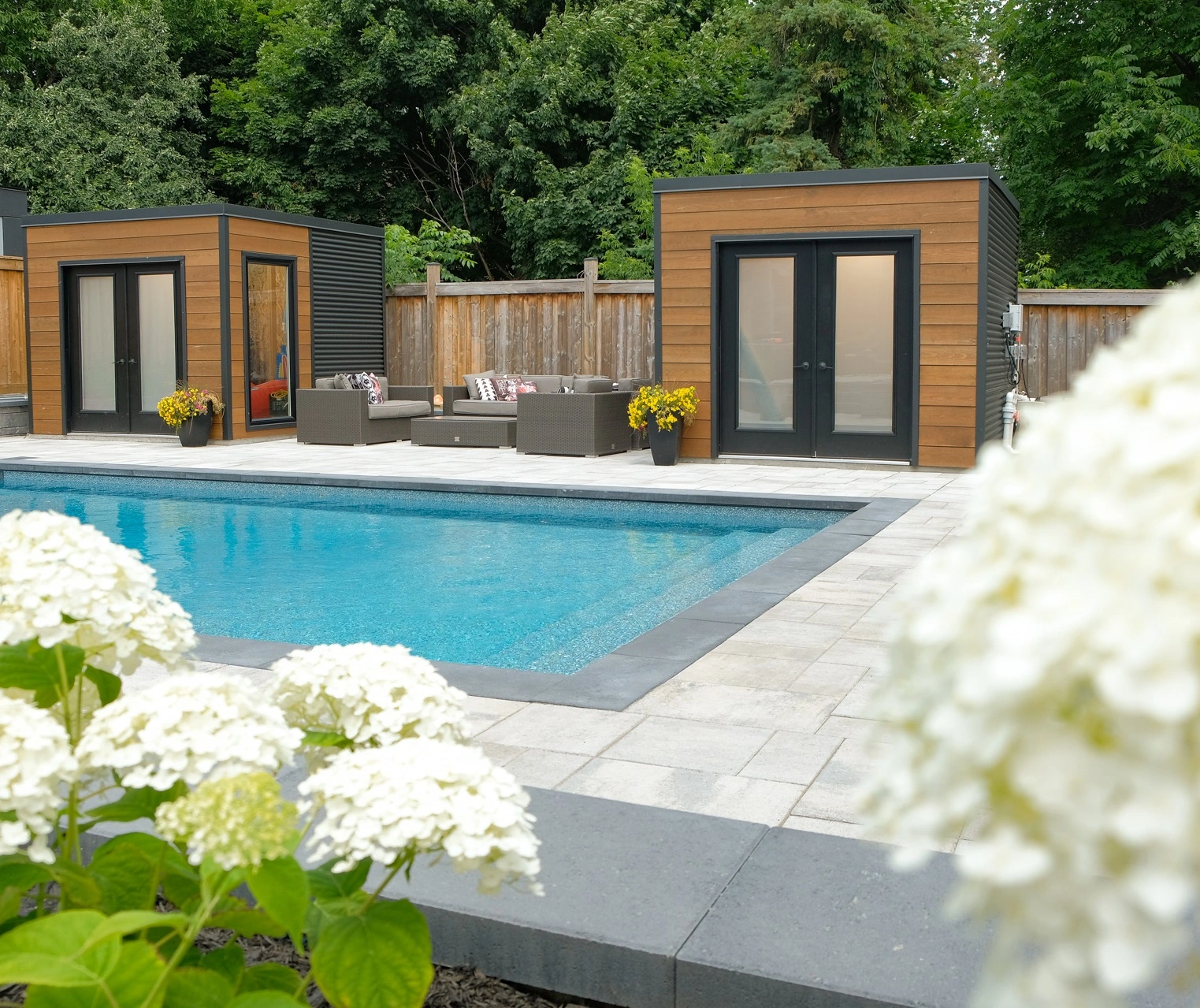
Owning a pool is a significant investment of money, time, and energy. The water, the stonework, the landscaping, and the furniture all get a lot of attention. The practical side, where all the pumps, filters, and controls live, often gets pushed to the last minute. That is usually when a basic, pre-fabricated shed gets placed beside the pool and everyone hopes for the best.
A purpose-built pool equipment shed is different. It is planned around the gear that keeps your pool running and the climate it needs to survive in. In Ontario, with our temperature swings, snow, and freeze-thaw cycles, design and construction quality are not about looks alone; they protect your investment. In this article, we will walk through how to plan a pool equipment shed that keeps your system safe, works year-round, looks modern and intentional, and avoids surprises with codes, trades, and long-term upkeep.
Pool equipment sheds are not just hiding spots. Inside, you may have:
• Pumps and filters
• Gas or electric heaters
• Saltwater systems and automation controls
• Electrical panels and timers
• Chemical storage and cleaning tools
When this gear sits under a thin, leaky, or poorly vented structure, problems start to show up. Moisture collects around electrical parts. Gas heaters struggle to vent properly. Heat builds up in summer. Chemicals share space with wiring and heaters. All of this can shorten the life of your equipment and can even affect warranties.
Common risks with a basic or makeshift shed include:
• Water getting into electrical components
• Corrosion from trapped humidity
• Unsafe or blocked heater venting
• Chemical fumes in a tight, unvented space
• Roofs or walls that do not stand up to snow loads
In the long run, the shed is a small part of your total pool budget, but it has a big impact on how long the expensive parts last and how reliable they are. In Ontario, where we see heavy snow, deep cold, and hot summers, a pool equipment shed needs to be treated as a small building, not a temporary box. That means planning for proper foundations, framing, and weather protection from the start, so the structure is built to code and built to last.
Good planning starts before the first post goes in the ground and helps you avoid last-minute decisions or extra coordination.
Site placement and access matter more than most people think. You want to consider:
• Distance from the pool, to keep plumbing runs practical
• Setbacks from property lines and other buildings
• Existing utilities like gas, electricity, and drainage
• Local zoning rules that affect size and placement
You also need to think about how people will actually use the space. Service technicians need to bring in parts, tools, and sometimes full pieces of equipment. Clear paths, doorways that open fully, and enough space to move around the equipment make every visit easier, in both summer and winter. This reduces small day-to-day frustrations and helps keep service calls straightforward.
Inside, layout and organization are key. When we plan these sheds, we look at:
• Manufacturer clearances around heaters, filters, and pumps
• Logical sequences for plumbing runs and valves
• Space for future upgrades like a larger heater or automation
• Safe separation between chemicals and electrical panels
You do not want a filter jammed into a back corner where no one can reach the drain plug, or valves tucked behind a heater. A bit more floor space, planned properly, makes maintenance safer and faster for years and reduces the chance of disruptive rework later.
Seasonal performance is another big piece. Not every pool equipment shed needs the same level of insulation and heating, but you should think about:
• Whether you want the space to stay above freezing
• Passive ventilation, like vents or louvres, to let moisture escape
• Active ventilation, like a fan, for tight spaces with heaters
• Simple low-level heat for sensitive components if needed
A well-planned shed makes opening and closing the pool smoother. Proper drainage, clear access to shutoffs, and protected lines help reduce the chances of frozen pipes or cracked fittings when the temperature drops, lowering long-term risk.
In Ontario, even a smaller shed can trigger requirements under the Ontario Building Code and local bylaws. That includes structural strength, snow load capacity, foundations, vapour control in some cases, and safe spacing around gas and electrical services. Building something that is just “good enough” can cause headaches later if you ever need inspections or plan to sell your home.
Key code-related points to keep in mind:
• Proper foundation or anchoring so the shed does not move or settle
• Roof and wall structure sized for local snow and wind loads
• Respecting clearances around gas meters, vents, and exhausts
• Following rules for electrical installations and panels
Materials are just as important as structure. Many generic, lightweight sheds are made with thin framing, basic roofing, and siding that looks good for a short time but struggles with Canadian weather. A higher-standard, purpose-built structure focuses on:
• Solid framing that resists warping and sagging
• Durable roofing systems suited for snow and ice
• Cladding that handles moisture and temperature swings
• Proper flashing to move water away from joints and openings
Rot resistance and moisture management are key. If water gets into the walls or around the base, hidden damage can slowly spread without obvious signs until repairs get serious.
Because pool equipment sheds tie into gas and electrical, licensed professionals should always handle those connections. A purpose-built structure makes their work easier and cleaner, with:
• Planned locations for conduit and gas lines
• Built-in clearances for heater exhausts
• Planned routes for drainage and condensate lines
This reduces the chance of unplanned openings, awkward vents, or unsafe changes later and supports a clean, professional installation.
A pool equipment shed does not have to look like a box pushed into a corner. In many modern backyards, it is right in the sightline from the house, the patio, or the pool. Thoughtful design helps it feel like part of the backyard, not an afterthought.
To keep things clean and modern, consider:
• Siding profiles and colours that echo the home
• Simple rooflines that tie into existing structures
• Door and window styles that match other elements on the property
Placement and proportion matter too. A shed that is too tall, too narrow, or placed in the wrong spot can draw the eye in the wrong way. Good siting can:
• Screen pool gear from view without blocking nice sightlines
• Create a backdrop for landscaping or seating
• Leave room for future additions, like a cabana or studio
Sometimes, it makes sense to blend functions. A pool equipment shed can also hold:
• Storage for cushions, covers, and toys
• A small change area or towel storage
• Wall space for hooks, nets, and cleaning tools
Thoughtful details like oversized doors, simple and bright lighting, and clean interior finishes go a long way. They make seasonal tasks quicker and less frustrating, and they keep the shed feeling organized instead of cluttered. A modern, minimal approach to detailing helps the structure feel calm and neat, even when it is doing hard work behind the scenes.
Many homeowners, especially busy professionals, do not want to manage permits, trades, and deliveries. Pool projects already come with enough decisions. Adding one more construction project on top can feel overwhelming.
A structured design and build process can remove much of that stress and reduce the chances of construction headaches. At Backyard Escape Studios, we focus on:
• Clear site assessments to understand constraints early
• Design conversations that balance function, code, and aesthetics
• Detailed drawings so everyone knows what to expect
From there, a professional team handles foundations, delivery, and installation. Coordinating with electricians and gas fitters is planned into the project so equipment is protected and ready to go. Because our buildings are designed specifically for Ontario backyards and built with precision craftsmanship, installation is efficient and disruption is kept to a minimum.
A well-designed pool equipment shed will protect your system for many seasons, reduce surprise repairs, and keep your backyard looking calm and organized. When it is built to code, built to last, and tailored to your property, it supports your pool investment quietly in the background, so you can focus on enjoying the water without having to manage one more trade or project.
Transform your backyard into a clean, organized and relaxing space with a purpose-built pool equipment shed designed to protect your gear year-round. At Backyard Escape Studios, we work with you to plan a structure that fits your pool layout, storage needs and budget. If you are ready to explore options or have questions about customizing a design, contact us and we will help you move your project from idea to installation.
Today is the day to start building the structure of your dreams. Share your design ideas with us so we can get started on bringing your shed to life.
